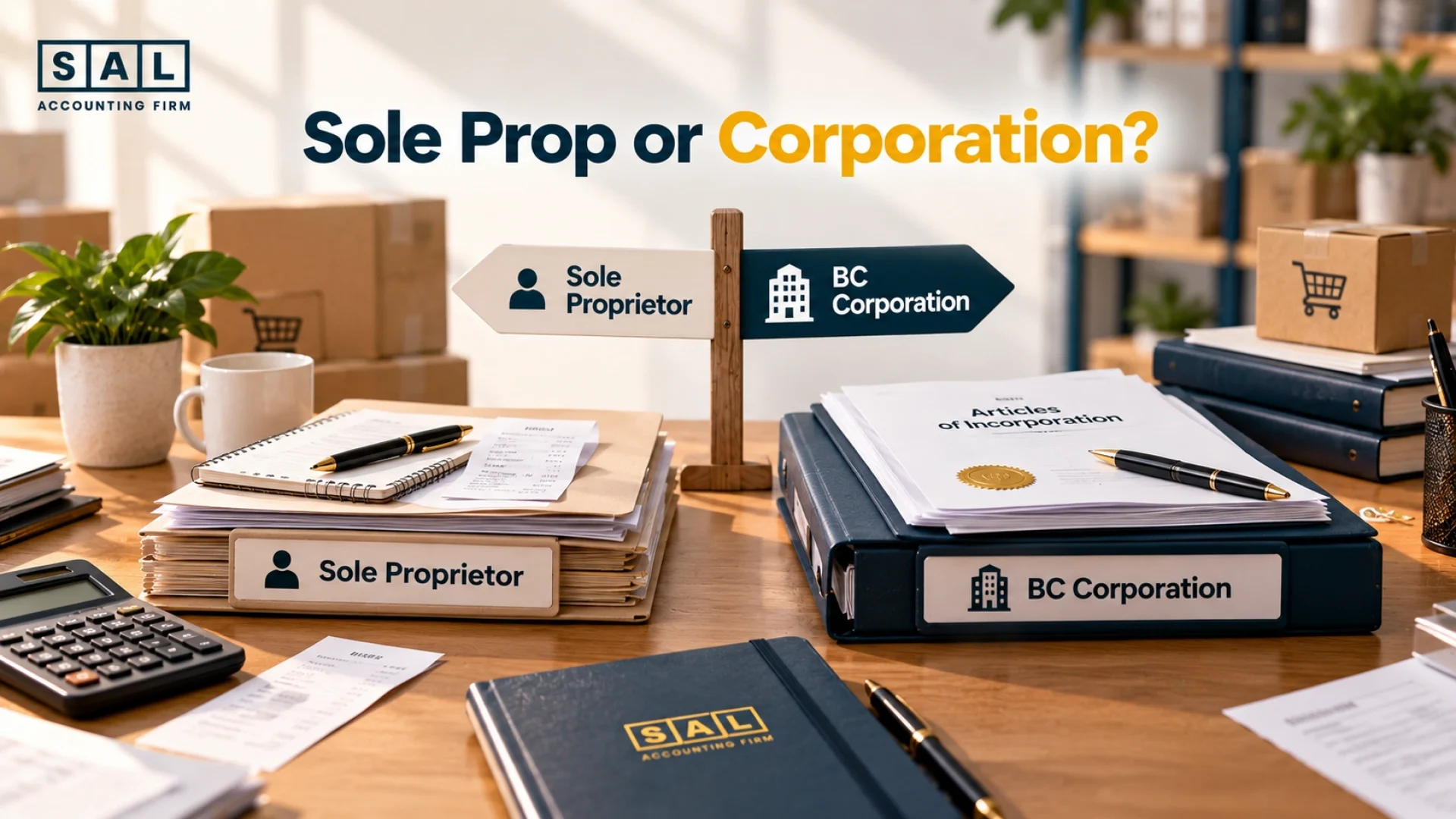
Your Surrey online store is growing. Is it time to incorporate? While profits are small, a sole proprietorship is simpler and cheaper. A BC corporation pays just 11% on the first $500,000 of active business income, which starts to matter once you leave money in the business.
Read this before you pay a single filing fee: SAL Accounting shows exactly when the switch pays off and when it doesn’t.
Before you decide, estimate what a corporation would pay on your store’s profit with the Corporate Income Tax Calculator.
Quick Takeaways
- As a sole proprietor, your store’s profit is taxed as your personal income.
- A BC corporation pays 11% combined tax on the first $500,000 of active business income.
- The tax advantage mainly comes from profit you leave in the corporation, not profit you take out.
- Incorporating in BC costs $350, plus $30 if you want a named company.
- After incorporating, you need a new business number, new tax accounts, and updates to your PST and Surrey licence records.
- Related companies share some BC limits, so owning two companies doesn’t double your breaks.
Choosing a structure is one of the bigger setup decisions for a growing store. Seeing how ecommerce bookkeeping works under each structure shows what you’ll need to track either way.
What’s the Difference Between a Sole Proprietor and a Corporation for a Surrey Online Store?
As a sole proprietor, you and your store are the same for tax purposes, while a corporation is its own separate taxpayer.
That’s the core difference for this decision. The broader comparison, including liability and ownership, is laid out in this guide to Canadian business structures.
The separation shows up right away. Because a corporation is a new legal entity, CRA’s guidance on a change of legal status says an existing business that incorporates needs a new business number, with its own tax accounts.
How Is a Surrey Online Store Taxed as a Sole Proprietor in BC?
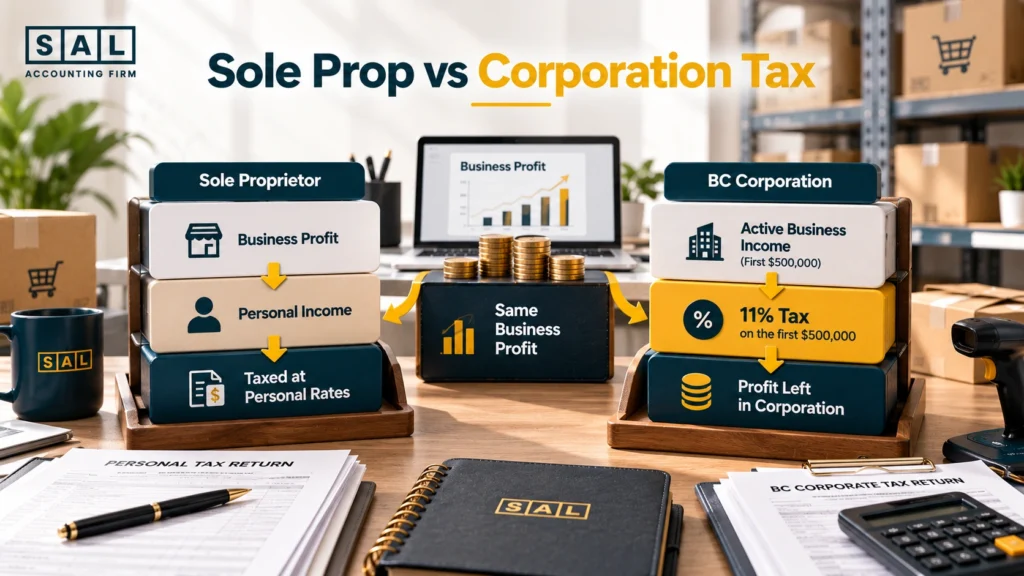
Your store’s profit is added to your personal income and taxed at BC and federal personal rates.
There’s no separate business tax return. Your profit goes on your personal return, together with any other income you earn. The more you earn in total, the higher the rate on your last dollars.
BC’s 2026 budget raised the lowest personal tax rate from 5.06% to 5.60%, effective January 1, 2026. The budget made no change to corporate tax rates or the $500,000 small business limit, according to CI Financial’s summary of the 2026 BC budget.
For a small store, this setup is simple. You keep one set of books, file one return, and take money out whenever you need it.
Case Study: How a Fleetwood Jewellery Store Stays a Sole Proprietorship1
Priya runs a small online jewellery store from her home in Fleetwood, Surrey, as a side business. Her store earns a modest profit, and she uses all of it each year to cover her living costs.
The problem: Friends keep telling Priya she should incorporate. She’s not sure whether she’s missing out by staying a sole proprietor.
What she does: Priya looks at where the tax advantage of a corporation comes from. It mostly applies to profit left inside the company. Since she takes out everything her store earns, she’d pay personal tax on it anyway, plus take on the cost and paperwork of a corporation.
The result: Priya stays a sole proprietor. She keeps her books simple and plans to revisit the decision if her store grows past what she needs to live on.
How Is a Surrey Online Store Taxed as a BC Corporation?
The corporation pays 11% on the first $500,000 of active business income, and you pay personal tax only when you take money out. The 2026 rates break down like this:
- Small business rate: 2% BC plus 9% federal, for 11% combined, on the first $500,000 of active business income
- General rate: 12% BC plus 15% federal, for 27% combined, on active business income above $500,000
These match the 2026 corporate income tax rates published by TaxTips.ca.
Here’s a simple example. If your corporation earns $100,000 of active business income, it pays 11%, or $11,000, in corporate tax.
The catch is the second layer of tax. When you pay yourself a salary or dividends, that money is taxed again personally. So the real advantage comes from profit you leave in the corporation to grow the business. That money is only taxed at 11% until you take it out.
When Does Incorporating Make Sense for a Surrey Online Store?
Usually when your profit is steady and more than you need to live on. Signs it may be time:
- Your profit is consistently higher than your personal spending needs
- You want to reinvest in inventory, equipment, or marketing
- Your products carry risks you’d like to keep separate from your personal finances
- You plan to hire staff
If you take out every dollar your store makes, the tax advantage shrinks. If you leave a large part in the business, it grows.
It also helps to separate profit from cash. A store can show a healthy profit while its cash is tied up in stock, which is why understanding ecommerce profit vs cash flow matters before you decide how much to leave in the business.
Case Study: How a Cloverdale Home-Goods Store Decides to Incorporate2
Jason runs an online home-goods store from a warehouse unit in Cloverdale, Surrey. His profit has grown well past what he needs to live on. He wants to put the extra money into more inventory for the holiday season.
The problem: As a sole proprietor, all of Jason’s profit is taxed at his personal rates, even the money he plans to put straight back into stock. The higher his income goes, the more of it lands in higher personal brackets.
What he does: Jason incorporates his store in BC. He pays himself what he needs to live on, and he leaves the rest in the corporation.
The result: The profit Jason leaves in the business is taxed at 11%, so more of it is available to buy inventory. He’ll pay personal tax on that money only when he takes it out later.
How Much Does It Cost to Incorporate an Online Store in BC?
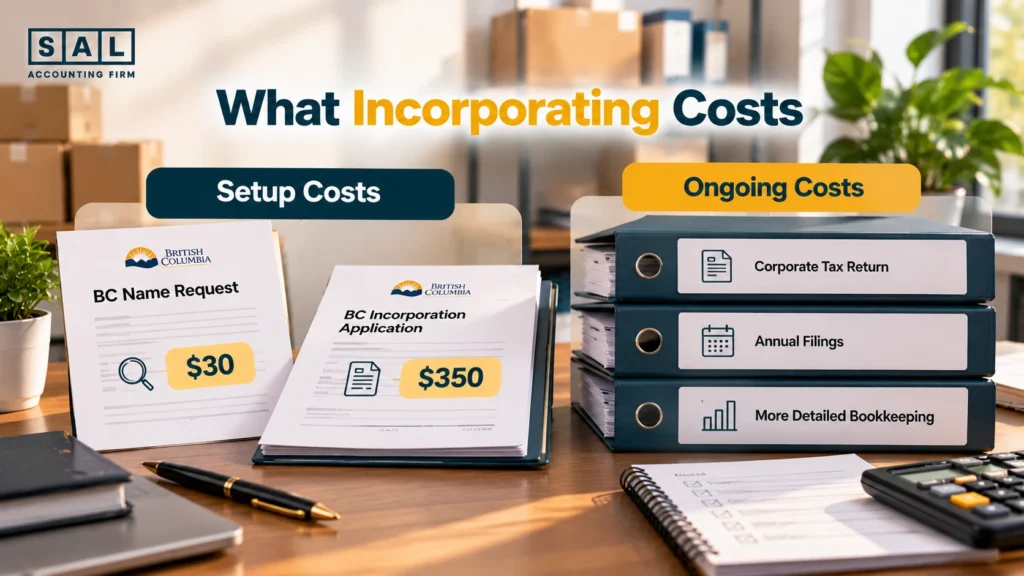
It costs $350 to incorporate with BC Registries, plus $30 if you want a named company. The one-time government fees are listed on the BC government’s forms and fees page:
- Name request: $30
- Incorporation application: $350
For comparison, registering a sole proprietorship with a business name costs $40 through the BC Business Registry, plus the $30 name request. The bigger costs come after setup:
- A separate corporate tax return every year
- Annual filings with BC Registries
- More detailed bookkeeping, since the corporation’s money must stay separate from yours
The general incorporation steps are covered in this guide on how to set up a corporation in Canada.
Pro Tip: Price out the yearly costs before you incorporate, not just the setup fees. The annual tax return and bookkeeping usually cost far more than the $350 filing.
What Changes After You Incorporate Your Surrey Online Store?
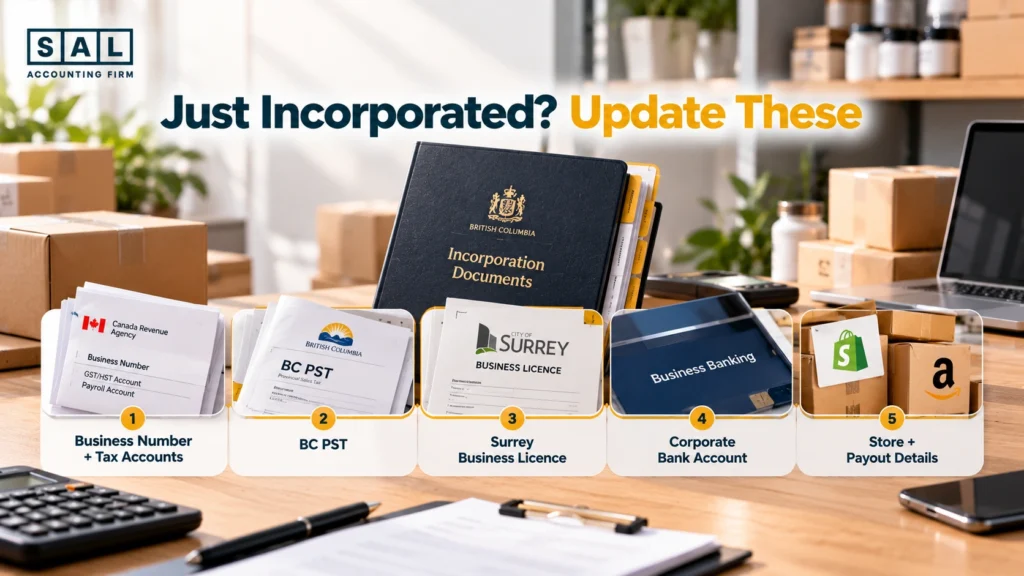
Your business number, tax accounts, licence, and bank account all need updating. Use this checklist:
- Business number: get a new one for the corporation, register the GST/HST and payroll accounts you need on it, and close the old sole proprietor accounts
- BC PST: report the change in legal structure
- Surrey business licence: update your licence with the City
- Bank account: open a new account in the corporation’s name
- Store platform and payment processor: update your business details and payout account
If you’re registered for PST, a change from sole proprietor to corporation must be reported. The registration rules and what follows after you have a PST number are laid out in this guide to BC PST registration for online stores.
The City of Surrey requires every business in Surrey to hold a valid business licence. The City’s page on updating your business licence explains that a change of name results in a new licence and that a change of ownership costs $25. Confirm with the City how your switch should be filed before you start.
Case Study: How a Guildford Online Store Gets Caught Between Two Structures3
Amandeep incorporates his online store from his office in Guildford, Surrey. He’s focused on growing sales, so he keeps selling through his old setup and plans to update everything later.
The problem: Months later, his PST account, store payouts, and bank account are all still under his personal name as a sole proprietor. Sales are going to the wrong entity, and his corporation’s books don’t match its bank account.
What he does: Amandeep updates his PST registration and payment processor details, moves payouts to the corporation’s bank account, and works through the year-end records to separate what belonged to each structure.
The result: His corporation’s books finally line up, but untangling several months of mixed records takes far longer than the updates would have. He now tells other store owners to treat the checklist as part of incorporating, not something for later.
Do Surrey Online Store Owners With More Than One Company Lose Any BC Tax Breaks?
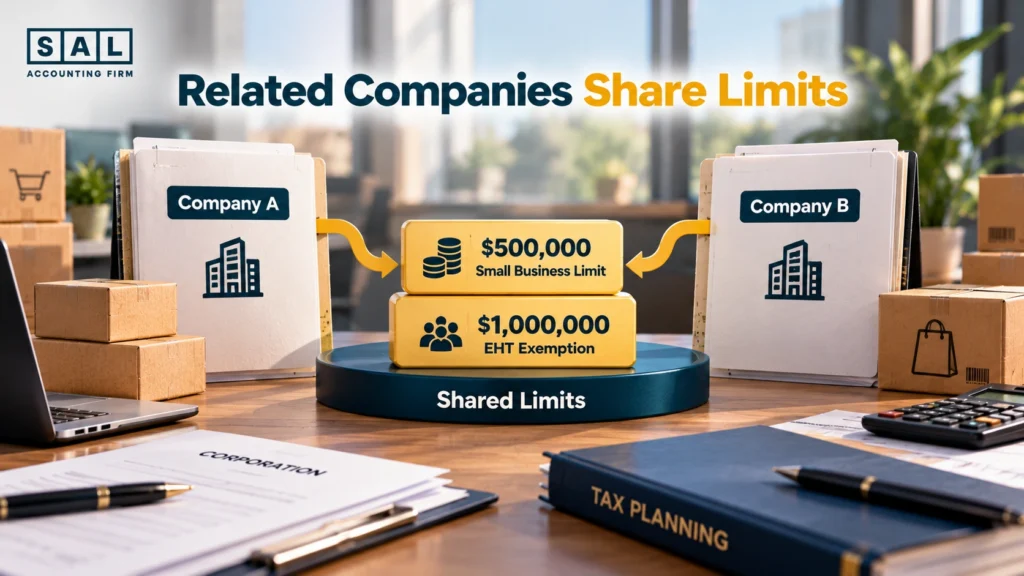
Yes, related companies often share certain limits instead of each getting their own.
Two examples:
- The $500,000 small business limit: associated corporations share one limit between them
- BC employer health tax: associated employers share one $1,000,000 exemption
So splitting your store into two companies doesn’t double your breaks. Owners who also run a wholesale business or a second brand should check this before setting up another company. How the shared exemption works for payroll is explained in employer health tax for Surrey online stores.
Final Thought: Is It Time to Incorporate Your Surrey Online Store?
While your profit is small and you need all of it to live on, a sole proprietorship keeps things simple and cheap. Once you’re leaving real money in the business, a BC corporation’s 11% rate starts to pay off. If you incorporate, plan for the yearly costs and update every account, licence, and payout right away.
Whichever structure you choose, our free roadmap for your store’s next stage helps you plan the money decisions that come after it.