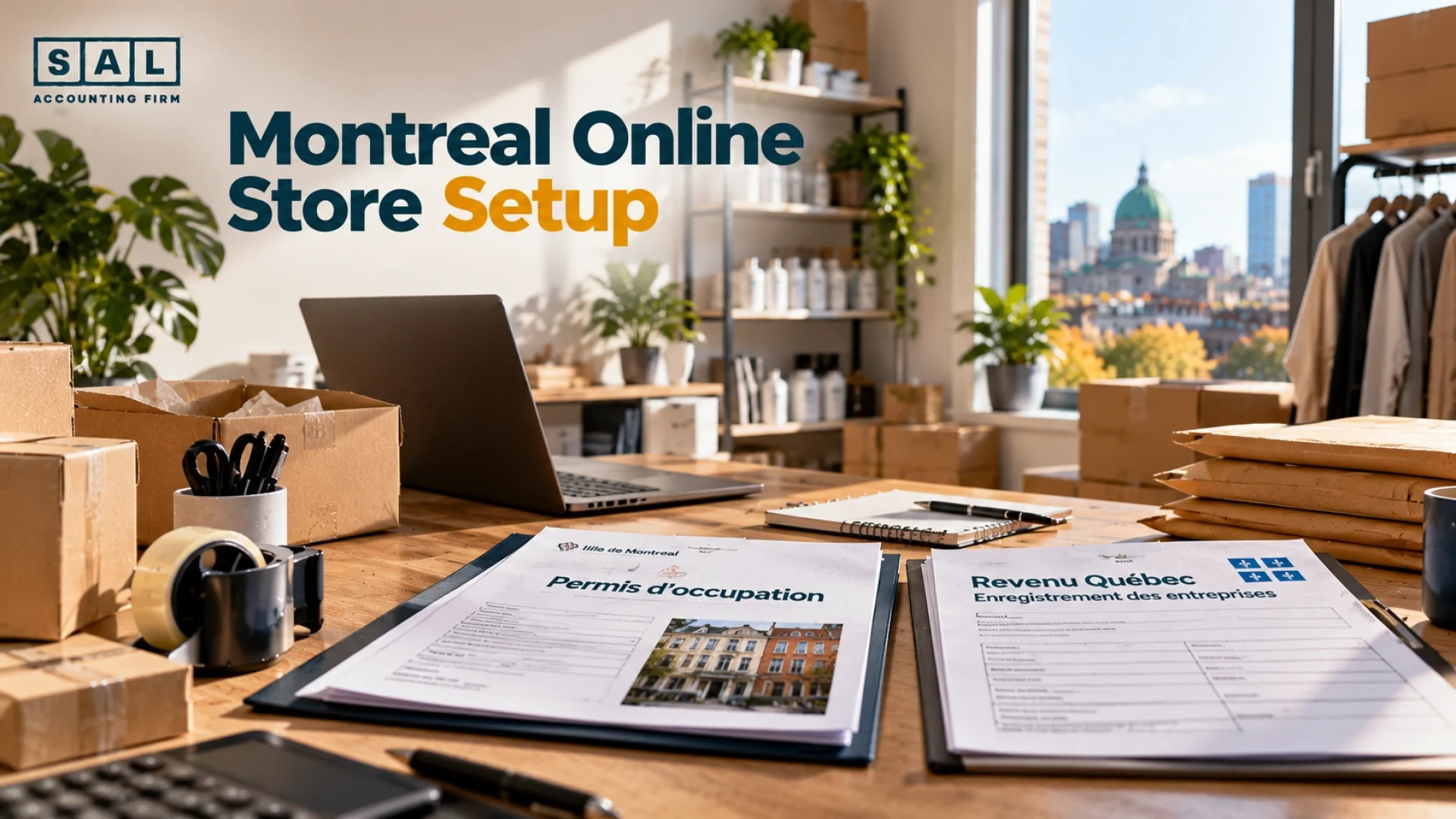
Searching for a Montreal business licence and coming up empty? Montreal’s own guide to opening a business points you to an occupancy permit, not a general business licence. Most home-based online stores need that permit from their borough, and many also need to register with Quebec’s enterprise register.
SAL Accounting lays out what applies to an online store run from home and how to get each piece in place.
Before you set anything up, work out what your store really keeps from each sale with the Shopify Fee Calculator.
Quick Takeaways
- Montreal points businesses to an occupancy permit, not a general business licence.
- You need the permit even if you only use part of your home as an office.
- Rules and fees vary by borough, so check yours.
- You must register with the REQ if you sell under a name that doesn’t include your surname and given name.
- Registration is due within 60 days of the date it becomes required.
- If your business name isn’t in French, you must declare a French version.
Getting your permits in place is one of the first steps for any online store. Seeing how ecommerce bookkeeping fits around them shows which records to keep from day one.
Do You Need a Business Licence to Sell Online in Montreal?
Not a general one, but you’ll likely need an occupancy permit and, in many cases, REQ registration.
Some Canadian cities issue a general business licence to every business. Montreal works differently. Its guide to opening a business points you to an occupancy permit for the space you use, and Quebec’s enterprise register handles business registration separately.
Here’s how the pieces fit together for a Montreal online store:
| Requirement | Who Handles It | When It Applies |
|---|---|---|
| Occupancy permit | Your Montreal borough | When you use a space, including part of your home, for business |
| REQ registration | Registraire des entreprises du Québec | When you sell under a name that doesn’t include your surname and given name, or you’re a partnership or corporation |
| French version of your name | Registraire des entreprises du Québec | When your registered business name is in a language other than French |
| GST and QST registration | Revenu Québec | Once your taxable sales pass $30,000 |
Specialized activities can need other permits too. To see the full list for your business type, the Government of Canada’s free BizPaL service builds a personalized list of permits and licences from all levels of government.
What Is an Occupancy Permit, and Does Your Montreal Online Store Need One?
An occupancy permit is the City’s approval to use a space, including part of your home, for business.
Montreal requires an occupancy permit, also called a certificate of occupancy, to carry on commercial or industrial activity in a building, or to use part of your home for professional purposes, such as a home office.
That last point matters for online sellers. The City says the permit is needed even if you’re only using part of your home as an office. Selling online doesn’t change that, because the work still happens at your address.
Each borough handles its own permits, and the rules and fees aren’t the same everywhere. Check your borough’s page before you start operating from your space.
Case Study: How a Verdun Sneaker-Care Store Checks Its Borough’s Rules1
Marc runs an online sneaker-care store from his apartment in Verdun, Montreal. He sells cleaning kits and protective sprays, and he packs every order himself at his kitchen table.
The problem: Orders grow fast. Marc starts storing stock in his spare room and brings in a part-time packer two days a week. He’s never applied for an occupancy permit, and he isn’t sure whether his growing setup is allowed at his address.
What he does: Before expanding further, Marc checks Verdun’s occupancy permit page for his address. He gathers the documents it asks for, including his landlord’s authorization, and applies.
The result: Marc’s home setup is approved before he grows any further. He now knows his borough’s rules and checks them again before each new change to how he uses the space.
How Do You Apply for an Occupancy Permit in Montreal?
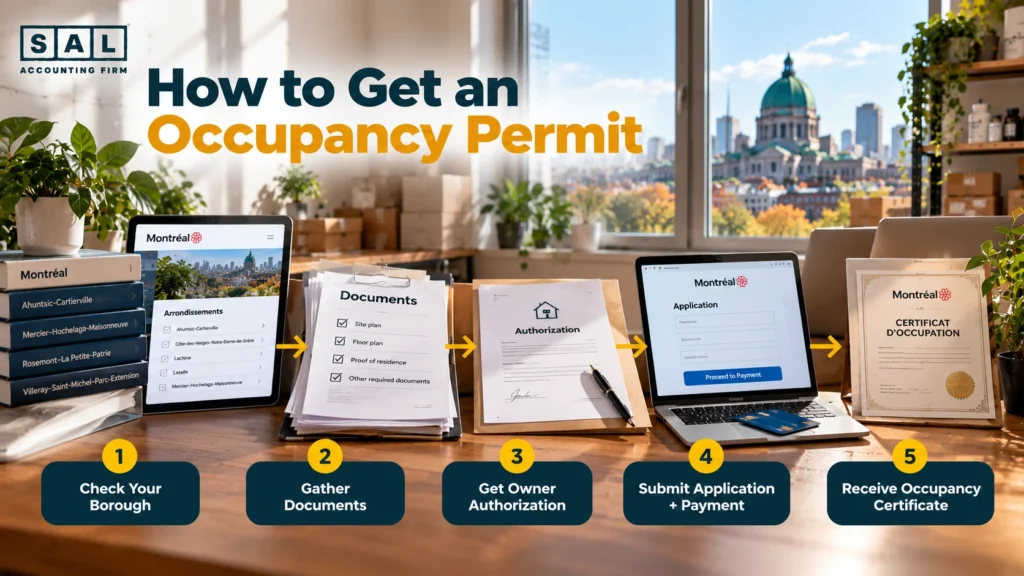
You apply through your borough, before you start operating from the space. The process differs by borough, but it generally follows these steps:
- Find your borough’s occupancy permit page on montreal.ca
- Check the documents your borough requires
- Get the owner’s authorization if you’re using part of your home and don’t own it
- Submit your application with the documents and payment, following your borough’s instructions
- Receive your certificate of occupancy
Fees also vary by borough, so check the amount on your borough’s page before you apply.
Pro Tip: Ask your landlord for written authorization early. If you rent, it’s one of the documents the City asks for, and waiting on it can hold up your whole application.
Do You Have to Register Your Montreal Online Store With the REQ?
Yes, if you sell under a name that doesn’t include your surname and given name, or if you’re a partnership or corporation.
Under the Act respecting the legal publicity of enterprises, a sole proprietor must register if they operate under a name that doesn’t include their own surname and given name. So “Marie Tremblay” doesn’t trigger registration, but “Tremblay Naturals” does.
Timing matters. The registration declaration must be filed within 60 days after registration becomes required.
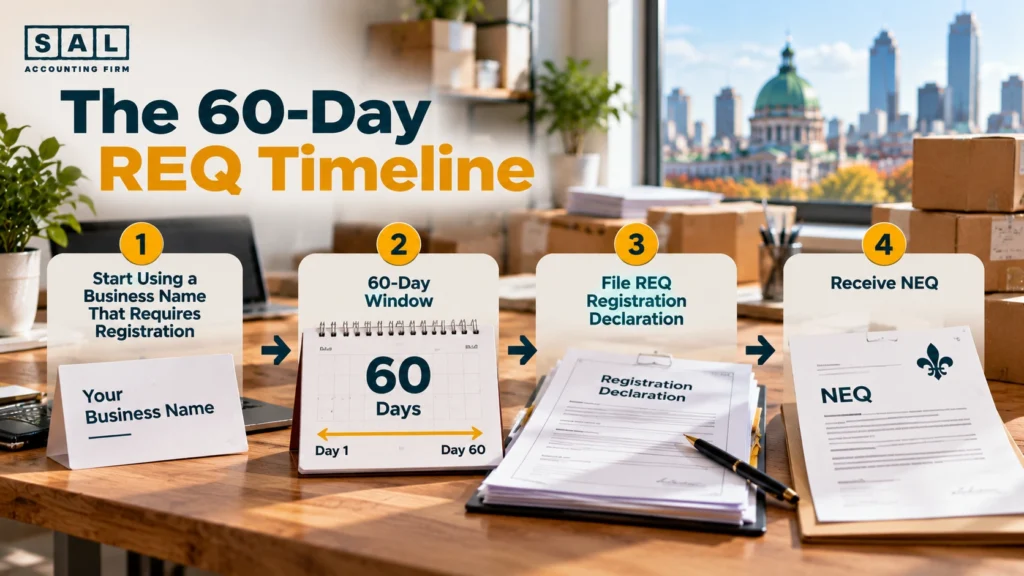
Once you’re registered, you get a Quebec enterprise number (NEQ). Your business uses it to identify itself to the Registraire and other government agencies. You also have to meet the legal obligations of registration for as long as the business exists, including keeping your information in the register up to date.
Registration is separate from your choice of structure. Sole proprietors, partnerships, and corporations each have different setups and costs, which are compared in this guide to Canadian business structures.
Case Study: How a Rosemont Ceramics Shop Learns About the 60-Day Rule2
Sophie sells handmade mugs and bowls online from her apartment in Rosemont, Montreal. She calls her shop “Atelier Sophie” and uses that name on her website and packaging.
The problem: Sophie assumes an online-only shop with no storefront doesn’t need to register. But “Atelier Sophie” doesn’t include her surname, so using it means registration became required, and the 60-day clock started when she began operating under that name.
What she does: Sophie files her registration declaration with the REQ right away and receives her NEQ. She also notes the annual updating declaration in her calendar.
The result: Sophie’s shop is properly registered under its trade name. She now keeps her NEQ handy for tax registrations and supplier paperwork.
Does Your Montreal Online Store’s Name Need a French Version?
Yes, if your business name is in a language other than French, you must declare a French version. Under Quebec law, a registrant whose name is in another language must declare the French version of that name used in Quebec.
For an online store with an English name, like “Northern Glow Skincare,” that means declaring a French version when you register. The rule doesn’t apply to a sole proprietor registered under only their surname and given name.
How Much Does It Cost to Register a Business in Quebec?
A sole proprietor pays a registration fee of $41, plus an annual registration fee for as long as they’re registered. According to the Registraire des entreprises’ official fee schedule for 2026, a sole proprietor pays:
- Registration declaration: $41 regular, or $61.50 for priority processing
- Annual updating declaration, including the annual registration fee: $41
Late filing costs extra. If you file the annual updating declaration late, a penalty of 50% of the annual registration fees applies.
Sole proprietors usually pay the annual fee through their Quebec tax return. Revenu Québec explains that you report it on line 438, where you can also confirm your register information is correct.
Fees are updated each year, so check the current schedule before you file.
What Else Does a Montreal Online Store Need Before It Starts Selling?
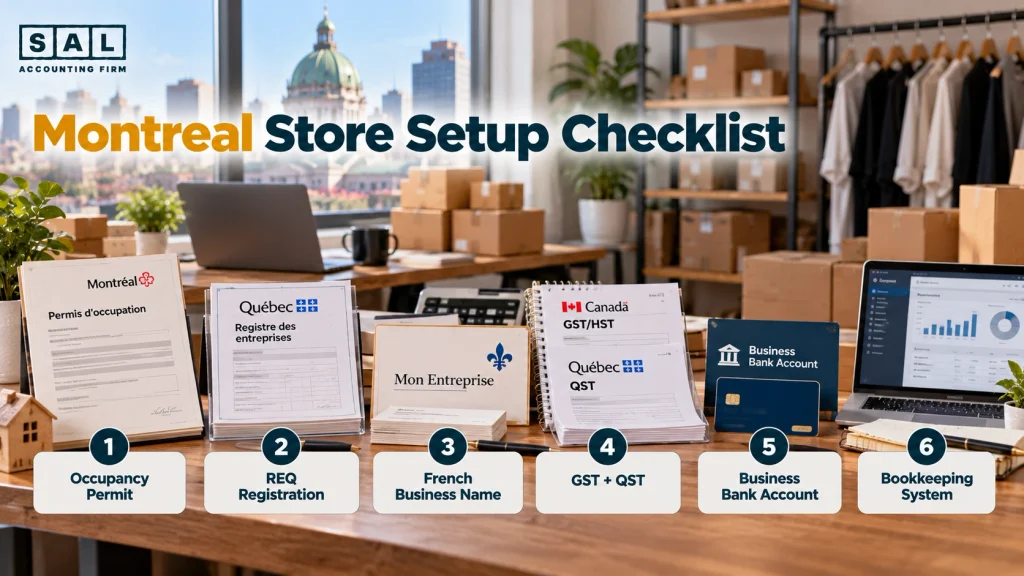
Sales tax registration once you pass the threshold, and clean books from day one. Here’s a simple setup checklist:
- Occupancy permit from your borough
- REQ registration, if your business name requires it
- A French version of your business name, if it’s in another language
- GST and QST registration, once your taxable sales pass $30,000
- A separate bank account for the business
- A bookkeeping system set up before your first sale
Sales tax in Quebec has its own rules, with two taxes on every Quebec order. The rates and registration rules are laid out in this guide to sales tax for Montreal online stores.
Final Thought: Is Your Montreal Online Store Set Up the Right Way?
Skip the search for a general business licence. Check your borough’s occupancy permit rules, apply before you operate from your space, and register with the REQ within 60 days if you use a trade name. Declare a French version if your name is in another language, and keep your registration up to date every year.
Once the paperwork is done, your attention can go where it belongs: growing the store. Start with our free growth roadmap to plan your next stage.