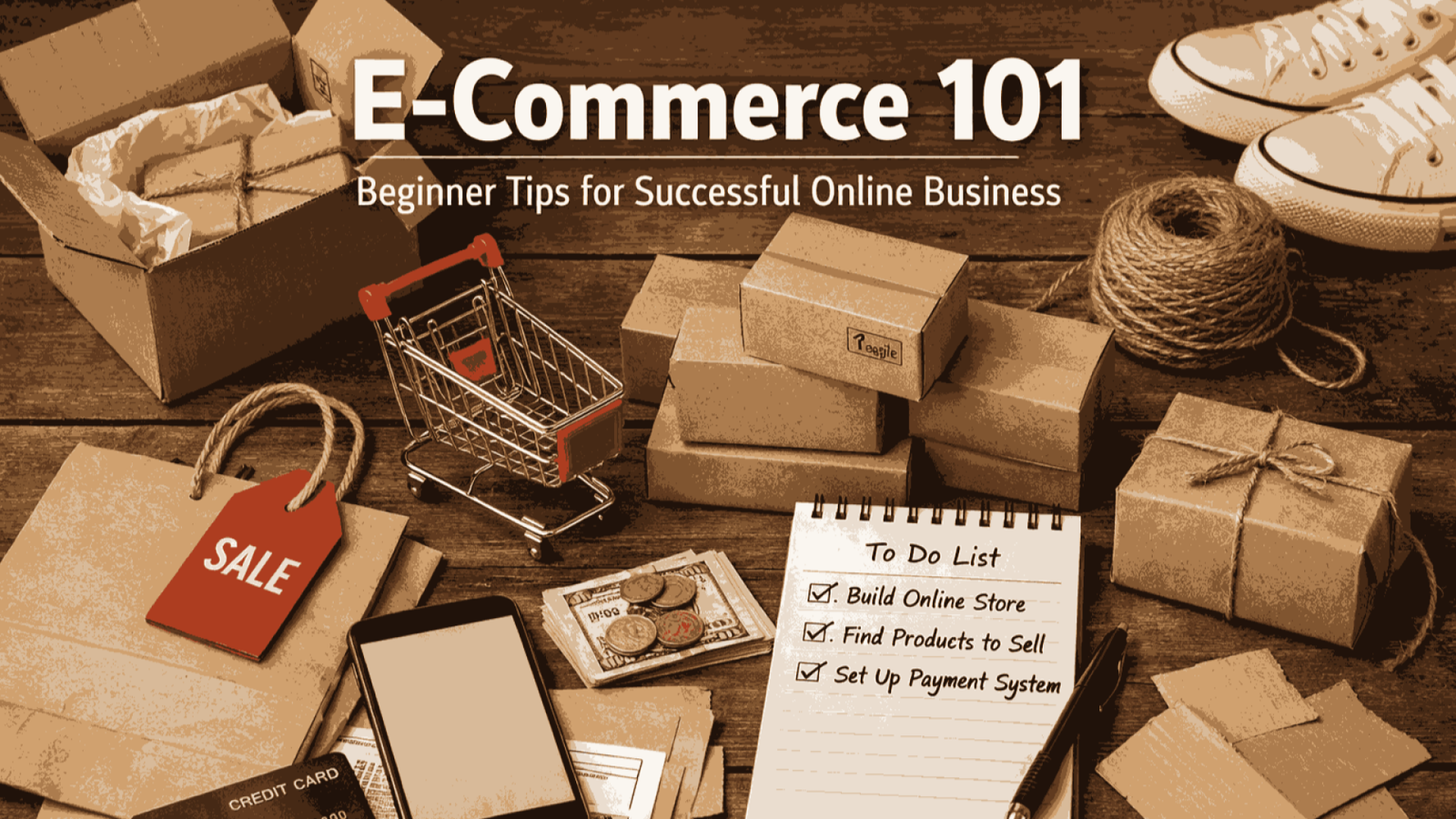
In this guide, we are sharing clear e-commerce tips for beginners so you can launch and grow your online store in 2026 without feeling overwhelmed. The surprising part is that global e-commerce sales are expected to hit $6.88 trillion this year, but around 80% of new online stores still fail in the first few years.
Most of those failures happen because people skip important basics, like picking the right platform, testing products first, or learning simple marketing. We at SAL Accounting are going to walk you through every one of those key steps in plain language so you can actually succeed.
Quick Takeaways
- E-commerce tips for beginners start with low-risk models like dropshipping or digital products. They need no inventory and let you launch fast in 2026.
- Niche down quickly and test ideas with a $20–$50 ad before buying anything big.
- Use Shopify or Wix for easy setup. Keep design mobile-friendly and start with one payment gateway.
- Get first customers organically. Post 3–5 times a week on social media and add basic SEO to your products.
- Beat challenges early. Niche to win against competition, track cash weekly, set one small goal at a time.
E-commerce Tips for Beginners: What You Need to Know in 2026
E-commerce means buying and selling stuff completely online. You can sell physical things that get shipped, digital files that download right away, subscriptions that keep coming, or even experiences people book online. An e-commerce accounting and bookkeeping expert can help you a lot in this way. Here is why e-commerce works best for beginners.
Why is 2026 a great time for beginners to jump in?
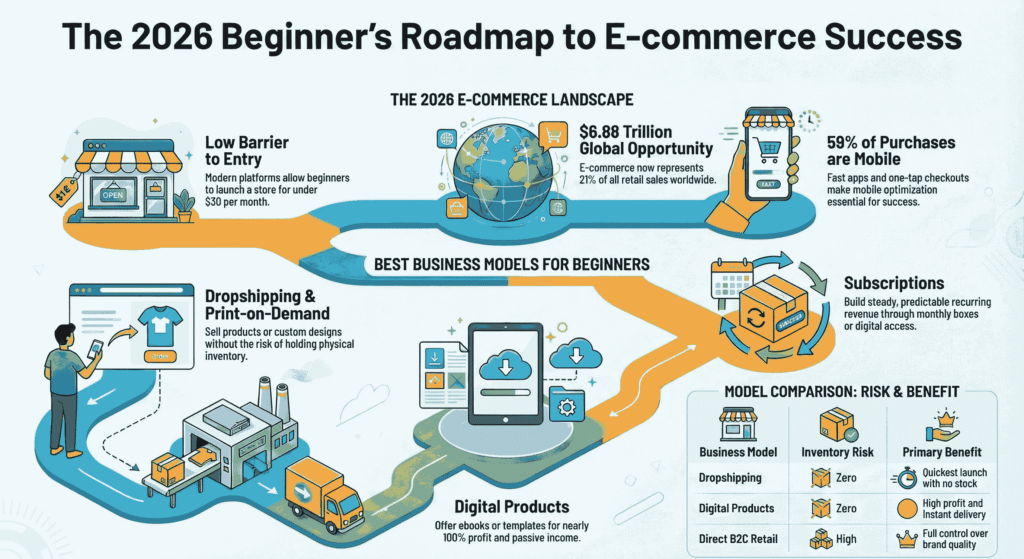
E-commerce is booming. Global sales are expected to reach $6.88 trillion (21% of retail). 59% of purchases happen on mobile thanks to fast apps and one-tap checkout. Platforms handle everything, no tech skills needed. Using best softwares for e-commerce sellers made everything easy. Here’s why it’s beginner-friendly right now:
- Massive growth: $6.88 trillion in sales opens doors for fresh stores every year.
- Mobile dominates: 59% of buys happen on phones, so mobile-friendly stores get ahead quickly.
- Low barriers: Platforms do the hard work; you just focus on products and customers.
- Cheap entry: Start under $30/month, no huge investment required.
- AI advantage: Tools suggest items, chat with buyers, and automate shopping steps for e-commerce like Shopify stores to save time.
Which E-commerce Models Work Best for Beginners?
Pick one simple model to start with. Don’t try everything at once. Beginners do best with low-risk options, no big money upfront, and no warehouse needed. Here are the easiest ones in 2026:
Dropshipping: Sell Without Holding Stock
You list products in your store. When a customer buys, a supplier ships directly to them. You never touch or store the item, so there’s no inventory risk or high upfront costs, perfect for testing ideas quickly. For instance, you can start dropshipping on Shopify as a beginner.
Pros:
- No inventory costs.
- Huge product choice from suppliers like AliExpress or Spocket.
- Run it from anywhere.
Cons:
- Lower profit margins (suppliers take a cut).
- Less control over shipping speed or quality, delays can hurt reviews.
- High competition in popular niches.
Dropshipping still works great for beginners. Good branding and fast, reliable suppliers help you stand out in a busy market.
Print-on-Demand: Create Custom Designs, No Inventory
You design graphics for t-shirts, mugs, posters, and more. A supplier prints and ships only after a sale. This lets you sell unique, branded items without buying stock first. ideal if you’re creative and want to build your own style. You don’t need to handle inventory accounting for your e-commerce store.
Pros:
- Full design control, your unique style.
- No upfront production costs.
- Easy to test designs quickly.
Cons:
- Printing and shipping costs eat into profits.
- Quality depends on the supplier (test samples).
- Slower fulfillment than regular stock.
Custom and personalized products grow fast. AI design tools make it much quicker and simpler for beginners to create nice-looking items.
Digital Products: Sell Once, Sell Forever
You create downloadable items like ebooks, printables, templates, or online courses. Customers get instant access after purchase, no shipping or restocking ever. This model offers high profits and passive income once you make the product. Don’t worry about Canada’s digital service tax (DST) as it is not applied in 2026. .
Pros:
- Almost 100% profit after creation.
- Instant delivery. Customers get it right away.
- Passive income potential.
Cons:
- It takes time and effort to create good products.
- Easy to copy, protect with watermarks or licenses.
- Need marketing to drive traffic.
Digital products remain one of the best options for beginners. Tools like Canva and AI speed up creation. Platforms like Etsy and Gumroad make selling easy. Check the Etsy seller tax guide for the U.S. and Canada to learn more.
Direct B2C Retail: Sell Your Own Physical Goods
You source, make, or curate physical products and sell them straight to individual customers through your online store. This gives you full control over quality and branding. Great if you want to build a real, recognizable brand over time.
Pros:
- Higher margins if you source well.
- Loyal customers love unique items.
- Easier to add personalization.
Cons:
- Need money for inventory upfront.
- Handle storage and shipping yourself (or use fulfillment services).
- Risk of unsold stock.
Starting small works really well; handmade items or niche products do great. Wholesalers and small-batch suppliers keep starting costs low.
Subscriptions: Build Steady Recurring Income
Customers pay regularly (monthly or weekly) for ongoing deliveries like beauty boxes, snacks, coffee, or digital access (e.g., exclusive content or tools). This creates predictable money coming in every month, which is helpful for planning and growing steadily.
Pros:
- Steady revenue, easier to plan.
- Builds loyalty and repeat buys.
- Works for physical or digital.
Cons:
- Harder to get the first subscribers.
- Need consistent value, or people cancel.
- Manage ongoing fulfillment.
Subscriptions grow quickly because people want convenience and loyalty. Niche boxes and digital memberships do especially well for new stores.
Pro Tip: Start with dropshipping or digital products. They have the lowest risk and quickest launch. Once you get sales, try print-on-demand or subscriptions to grow.
- Read More: “Which Shopify Plan Is Best for Dropshipping in 2026?”
This table helps you compare at a glance. Pick the one that matches your budget, skills, and goals:
| Model | Upfront Cost | Inventory Needed? | Risk Level | Profit Margin | Best For | Biggest Drawback |
| Dropshipping | Very low | No | Low | Medium-Low | Testing ideas quickly | Less control over shipping/quality |
| Print-on-Demand | Very low | No | Low | Medium | Creative people, custom designs | Higher per-item costs |
| Digital Products | Very low | No | Very Low | Very High | Passive income lovers | Time to create + easy to copy |
| Direct B2C Retail | Medium-High | Yes | Medium | High | Brand builders, unique items | Storage & unsold stock risk |
| Subscriptions | Low-Medium | Yes or No | Medium | High (recurring) | Steady income seekers | Harder to get first subscribers |
Case Study: Toronto Mom Builds $6,200/Month Dropshipping Store in North York1
Sarah, a 28-year-old mom from North York in Toronto, started with dropshipping on Shopify in early 2025. She niched down to eco-friendly pet toys for small dogs, ordered samples from Spocket, and validated with a $40 TikTok ad that got 25 sign-ups. In six months, she hit $6,200/month by focusing on fast suppliers and strong branding. She never held stock and kept costs low. proof that dropshipping works when you test and niche properly.
Problem
Many beginners fear inventory costs and slow shipping, which delays sales and hurts cash flow early on.
What She Does
Sarah chooses dropshipping to avoid stock risk. She tests suppliers with samples, niches tightly to eco pet toys, and validates demand with small TikTok ads. She focuses on fast, reliable suppliers and builds strong branding from the start.
The Result
Zero inventory headaches. She earns $6,200/month with steady cash flow and no unsold stock. She saves time and money, focusing on growth instead of storage worries. “I thought I needed a warehouse. Now it’s all automatic and profitable,” she says.
How to Start an Online Store in 2026: Tips for Beginners
You picked your model. Now build the actual store. Don’t worry, it’s easier than it sounds. Good platforms handle most of the work. Follow the steps below:
Website Design Basics: Keep It Simple and Mobile-Friendly
Your store needs to look clean and work great on phones; most shoppers use mobile. Keep these tips in mind:
- Use clear photos and big buttons (like “Add to Cart”).
- Make navigation easy. Home, Shop, About, Contact.
- Choose a simple theme with good colors and fonts.
- Test on your phone: Does it load fast? Is it easy to tap?
Many platforms give free or cheap templates. Use high-quality product images (take your own or use free tools). Add trust signals like secure badges and customer reviews.
Pro tip: Aim for fast load times, under 3 seconds. Slow sites lose customers. Check the best Shopify plans for beginners if you want to start.
Choosing the Right E-commerce Platform in 2026
Pick a platform that fits beginners, has an easy setup, good support, and fair costs. Here’s a quick comparison of the top ones for new stores:
| Platform | Starting Cost (Monthly) | Ease for Beginners | Key Strengths | Best For | Drawbacks |
| Shopify | $29–$39 | Very easy | Huge app store, built-in payments, AI tools | Quick launch, scaling up | Transaction fees if not using Shopify Payments |
| Wix | $27+ (commerce plans) | Super easy | Drag-and-drop builder, beautiful templates | Creative beginners, small stores | Less scalable for big growth |
| Squarespace | $26+ (commerce) | Easy | Stunning designs, all-in-one | Visual brands, portfolios | Fewer advanced e-commerce features |
| WooCommerce | Free (plus hosting ~$5–$20) | Medium | WordPress plugin, full customization | People who like WordPress | Needs more setup and maintenance |
| BigCommerce | $29+ | Medium | Strong built-in tools, no transaction fees | Growing stores without apps | Steeper learning curve |
Shopify wins for most beginners. It’s fast to set up, has great support, and scales well. Wix or Squarespace suits if you love design. WooCommerce is free but takes more effort.
Pro tip: Try free trials. Build a test store on a weekend to see what feels right.
- Read More: “Which Shopify Plan Is Best for Dropshipping in 2026?”
Payment Gateway Selection: Secure and Easy Options
Payments build trust. Pick one that’s secure and works worldwide. Top easy choices:
- Shopify Payments (built-in on Shopify): Low fees, no extra setup.
- Stripe or PayPal: Easy to add, accept cards and wallets.
- Square: Great if you sell in-person too.
Always use HTTPS (secure site badge). Offer multiple options, credit cards, Apple Pay, and Google Pay to reduce abandoned carts.
Pro tip: Start with one gateway. Add more later as you grow.
Essential Online Store Setup Steps
Follow these steps to launch:
- Buy a domain name (yourstore.com), use the platform or GoDaddy.
- Choose and customize a theme/template.
- Add your products, photos, descriptions, and prices.
- Set up shipping and taxes (use built-in tools).
- Add key pages: About, Contact, Shipping/Returns policy.
- Connect payments and test a fake order. Consider e-commerce taxes in Canada as well.
- Launch, share on social media, or email friends.
Add legal stuff like a privacy policy (many platforms have generators).
Pro tip: Launch with 5–10 products first. You don’t need a huge catalog right away. Start small so you can test everything, fix little issues, and get your first sales faster.
How to Choose Winning Products and Niches for Beginners?
Picking the right products and niche matters a lot. Choose something people want, but that isn’t too crowded. This way, you get sales quicker and don’t waste money.
What Makes a Winning Product in 2026?
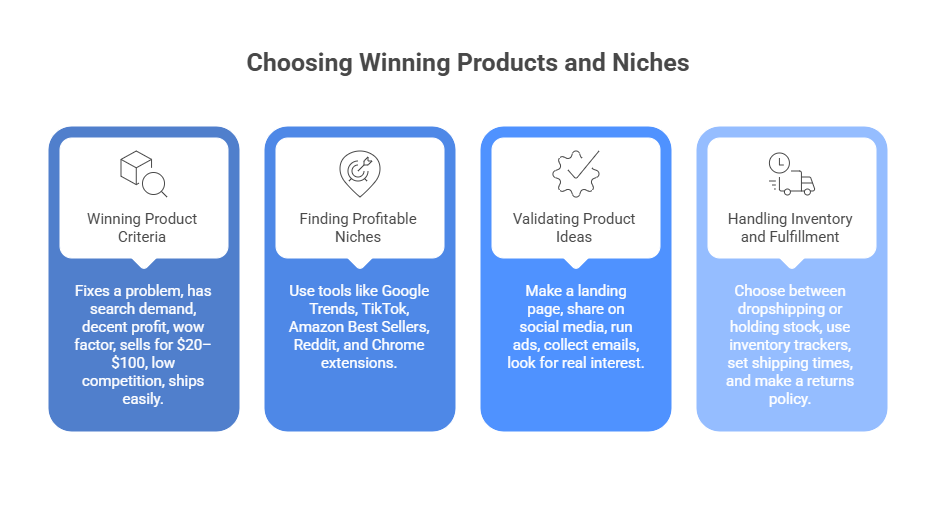
A good product fixes a real problem, has solid search demand, and gives you decent profit. Look for items that solve pain points (like posture correctors for back pain or vegetable choppers for quick cooking), have a “wow” factor (levitating lamps or motion sensor lights), sell for $20–$100 (easy impulse buys with good margins), show low competition but rising searches, and ship easily (lightweight and not fragile).
Pro tip: Skip super-trendy items that fade fast. Mix evergreen products (always sell) with a few trending ones. You can learn how to ship products between Canada and the U.S.
How to Find Profitable Niches and Products
Use free or cheap tools to spot good opportunities. Follow these steps:
- Check Google Trends to see rising searches (compare keywords over time).
- Browse TikTok search, Pinterest trends, or Instagram Reels for viral ideas.
- Look at Amazon Best Sellers or Etsy’s top items in different categories.
- Join Reddit subreddits or Facebook groups. See what people ask for or complain about.
- Try free Chrome extensions like Helium 10 or Jungle Scout basics to check sales estimates.
Beginner-friendly niches right now:
- Eco-friendly pet toys and accessories (sustainable, biodegradable).
- Simple home workout gear (resistance bands, compact yoga mats).
- Custom digital planners for students or busy parents.
- Natural skincare or wellness items (PDRN creams, cuticle balms).
- Smart home gadgets for energy saving (motion lights, small AI devices).
- Personalized phone accessories (cases, grips with unique designs).
Pro tip: Pick a niche you like or already know about. You create better content and connect with customers more easily. You may need our bookkeeping services here to get everything right.
How to Validate Your Product Idea Fast
Don’t order stock yet. Test first to see if people want it. Quick ways to check:
- Make a simple landing page (Carrd or Shopify draft).
- Share the link on Instagram, TikTok, Reddit, or Facebook groups.
- Run a small ad ($20–$50 on Facebook/Instagram or TikTok).
- Collect email sign-ups (“Get notified when it launches!”).
- Look for 10–20 real interests (likes, comments, sign-ups).
Pro tip: If people get excited (say “take my money” or ask when it drops), go ahead. If you have no real interest, change the idea fast and save your money.
How Do You Handle Inventory and Fulfillment as a Beginner?
Your store is live, and products are ready. Now focus on smooth operations, great customer service, and fixing common problems fast so you avoid costly mistakes and keep growing without stress:
- Dropshipping = no stock, supplier ships → lowest risk, but slower delivery and less control. You must also consider dropshipping taxes in Canada.
- Holding stock = buy 10–20 units → better margins and faster shipping, but needs storage and upfront cash.
- Use platform tools (Shopify/WooCommerce inventory tracker) or free apps like Google Sheets for simple tracking.
- Set clear shipping times on your site (e.g., 3–7 days domestic, 10–20 international).
- Make a short returns policy (30 days, buyer pays return shipping unless faulty) and display it clearly.
Pro tip: Celebrate your first 10 sales more than perfect inventory. Fix problems after you start making money, not before.
E-commerce Marketing for Beginners: How to Get Your First Customers
Your store is live, and products are ready. Now you need people to find it and buy. Marketing feels big at first, but you can start small and free. Focus on organic methods first. Paid ads come later. Aim for your first 10–50 visitors, then your first 1–5 sales.
What Digital Marketing Essentials Should Beginners Start With?
Build a simple base that costs almost nothing. Collect emails early. Use pop-ups or free downloads (discount code or checklist). Mailchimp or Klaviyo free plans work great. Post helpful content on social media. Share quick tips, product uses, or behind-the-scenes shots. Add basic SEO to product titles and descriptions. Use words people search (example: “eco-friendly yoga mat for beginners”).
Pro tip: Offer a small discount or free shipping on the first order. It turns curious visitors into buyers quickly.
What Social Media Marketing Strategies Work for New Stores?
Social media helps people discover your store fast. You can also sell internationally on e-commerce stores like Shopify. Use the platforms where your customers hang out.
- Instagram & TikTok: Post short videos: products in use, quick tips, unboxings, or fun trends.
- Facebook: Join groups in your niche and share helpful posts (not just sales links).
- Pinterest: Create nice pins with product photos and links (great for visual niches like home or fashion).
Post 3–5 times a week. Use relevant hashtags. Reply to every comment quickly. Run small giveaways (“Tag a friend to win”).
Pro tip: Make content that helps or entertains first. People follow for value, then buy from people they like.
How to Scale Your Online Store: Beginner Strategies in 2026
Now it’s time to grow bigger without making things too complicated. There’s plenty of room to grow if you do the right things. Let’s see how you can scale your store in the first steps:
Use Data to Guide Growth: Start with Google Analytics
You need to know what really works. No more guessing. Set up the free Google Analytics 4. It shows you where your visitors come from, which products sell best, and where people drop off (like at checkout). Check these numbers every week:
- Customer acquisition cost vs. lifetime value (try to get at least 3 times your money back)
- How many people buy again
- Your best traffic channels
Also, look at Shopify’s own reports. They give quick info like abandoned cart details.
Pro Tip: Stop spending on ads that don’t pay off. Move that money to the ads that do work. These small changes can lift your profits 20–30% without spending more. You must track expenses for your e-commerce business.
Expand Smartly: Multi-Channel, Loyalty, and Subscriptions
Don’t put everything in one place. Consider the following ways to organize everything:
- Multi-channel: List products on Etsy (great for handmade or digital stuff) or TikTok Shop (perfect for fast buys). Use apps to keep your stock in sync so you never oversell.
- Loyalty programs: Give points or discounts to people who buy more than once. Tools like Smile.io are simple and cheap. Repeat buyers usually spend much more.
- Subscriptions: Let customers sign up for regular deliveries, like monthly wellness items, snacks, or digital access. This gives you steady money coming in.
Ride 2026 Trends: AI, Social Commerce, and Sustainability
Jump on the things that matter right now, like the ones we explain below:
- AI personalization & chatbots: Turn on tools that suggest products to each person and answer questions any time. Shoppers love it when things feel made just for them. This increases sales.
- Social commerce: Sell directly on TikTok or Instagram. Use short videos and shoppable posts so people can buy without leaving the app.
- Sustainability: Show eco-friendly packaging or where your products come from. Younger buyers care about this. It builds trust and lets you charge a little more. Look at the e-commerce accounting guide for your business for more.
5 Quick Growth Hacks
- Team up with micro-influencers. They give real promotions without high costs.
- Split your email list and send offers that fit each group. You get more openings and sales.
- Add “buy these together” suggestions at checkout. This raises the average order size.
- Check your analytics often. Drop the weak stuff and grow the strong stuff.
- Put your best products on subscription. Turn one-time buyers into monthly income.
What Are the Biggest Challenges for New E-commerce Stores (How to Overcome)
New stores always hit some bumps. Most people quit because they don’t fix these early. Thats why you must avoid e-commerce accounting mistakes at the first steps. Here are the main challenges and simple ways to beat them:
Low Traffic: How to Get More Visitors When No One Finds Your Store
No visitors means no sales. This is the biggest problem for beginners. Your store can be perfect, but nobody sees it, so nothing happens.
How to overcome: Pick 1–2 platforms (Instagram or TikTok) and post 3–5 times a week with helpful content. Add basic SEO to product titles and descriptions so people find you in searches. Run small giveaways (“Tag a friend to win”) to get shares. Share value-first posts in niche Facebook groups or Reddit. Focus on one channel until it brings real traffic.
High Competition: How to Stand Out When Everyone Sells the Same Thing
Lots of big stores and small shops sell similar stuff. It feels hard to get noticed, even if you consider the e-commerce tax deductions.
How to overcome: Niche down right away (example: eco-friendly toys for small dogs only, not all pet toys). Show what makes you different, better quality, faster shipping, fun branding, or eco materials. Build a brand story (“Made by pet parents for pet parents”). Use your own real photos and honest descriptions. No generic stock images.
High Returns or Refunds: How to Reduce Returns and Keep Customers Happy
Too many returns cost money and hurt your reviews. Buyers get upset when the item doesn’t match what they expected.
How to overcome: Use real photos from different angles (not just factory shots). Add accurate size charts, material info, and fit guides on every page. Write honest descriptions with no hype. Set a clear 30-day returns policy (buyer pays return shipping unless faulty) and show it everywhere. Add short video demos so people know exactly what they get.
Bad or No Reviews: How to Get Honest Feedback and Build Trust
No reviews means low trust. New buyers skip stores without any feedback.
How to overcome: Ask politely for reviews after delivery (use automated email or message). Reply to every review, good or bad. Thank them and fix issues fast. Offer a small thank-you discount for honest feedback. Start with friends and family orders for early positive reviews. Use free tools like Loox or Judge.me to collect and show reviews nicely.
Cash Flow Problems: How to Avoid Running Out of Money
Money runs out fast when you spend on ads or stock before sales come in. Cash flow forecast for your e-commerce store becomes really hard. Many beginners go broke early.
How to overcome: Start with dropshipping or digital products, no big inventory cost. Reinvest profits slowly—don’t buy 100 units until 20 sell. Track every dollar in and out with simple tools (Google Sheets or free QuickBooks). Keep a small cash buffer for ads, samples, and surprises. Check numbers weekly so you spot problems early.
Feeling Overwhelmed or Burnt Out: How to Stay Motivated and Avoid Quitting
Trying to do everything at once makes most beginners quit. The work feels endless when you learn alone.
How to overcome: Set one small goal per week (example: 5 posts, 10 email sign-ups, 1 new product). Use free automation (Zapier for alerts, Shopify apps for tasks). Take regular breaks, small steps beat 24/7 work. Celebrate tiny wins (first sale, first review, first 50 visitors). Join beginner groups (Reddit r/ecommerce, Facebook) for support and ideas.
| Challenge | Problem | Quick Fix | Tip |
| Low Traffic | No visitors = no sales | Post 3–5×/week on 1–2 platforms, add SEO, small giveaways | Focus on one platform first |
| High Competition | Hard to stand out | Niche down, show unique points, build brand story | Use real photos, no stock images |
| High Returns | Costs money, hurts reviews | Real photos, size charts, honest descriptions, clear policy | Add video demos |
| Bad/No Reviews | Low trust, buyers skip | Ask after delivery, reply to all, thank-you discount | Start with friends/family orders |
| Cash Flow Problems | Money runs out early | Start dropshipping/digital, reinvest slowly, track every dollar | Keep cash buffer |
| Overwhelmed/Burnt Out | Too much work = quitting | One small weekly goal, free automation, take breaks | Celebrate small wins |
Case Study: Mississauga Entrepreneur Scales to $12,000/Month from Square One2
Mike, 32, from Mississauga (Square One area), runs a home workout gear store. He faces low traffic, high returns, and cash flow stress. He niches to apartment resistance bands, fixes returns with better photos and videos, posts TikTok 3x/week, starts with dropshipping, and grows to $12,000/month by solving one issue at a time.
Problem
Low traffic, high returns, and cash flow stress make the early months stressful and almost force him to quit.
What He Does
Mike niches down to apartment-friendly workout gear. He improves product photos, adds size charts and video demos to cut returns, and posts consistently on TikTok to drive traffic. He starts with dropshipping to keep costs low and reinvests profits slowly.
The Result
Traffic grows steadily, returns drop sharply, and cash flow stabilizes. He earns $12,000/month and runs a full-time business. “Solving one issue at a time made everything easier. “I almost quit, but small fixes changed everything,” he says.
You can also consult our e-commerce experts, like the Shopify accountants, to run your store smoothly.
Final Thoughts
You now have the full roadmap: understand e-commerce basics, pick the right model, set up your store, choose and validate products, source smartly, market organically, handle challenges, and scale with 2026 trends. Start small, test everything, fix one issue at a time, and stay consistent. Global sales hit $6.88 trillion this year. There is a huge opportunity if you avoid common mistakes. Your first sale is closer than you think.
SAL Accounting handles e-commerce bookkeeping, taxes, and cash flow for Shopify, Etsy, and other sellers. Contact us today for a consultation or your beginner tax checklist.
FAQs: E-commerce Tips for Beginners in 2026
Pick a niche and model (dropshipping/digital is easiest). Choose Shopify or Wix. Validate 1–5 products with a cheap ad test. Buy a domain, set up design/payments, launch with 5–10 products.
Post 3–5 times/week on Instagram/TikTok (short videos). Collect emails with pop-ups/free downloads. Add basic SEO to titles/descriptions. Share in niche groups/Reddit. Offer first-order discount or free shipping.
Low traffic (post consistently + SEO), high competition (niche down), high returns (real photos + size charts), no reviews (ask after delivery), cash flow (start dropshipping), burnout (one goal/week). Fix one at a time.
Organic social (Instagram/TikTok videos 3–5x/week), basic SEO (long-tail keywords in titles), email collection (pop-ups/freebies), trust badges + urgency on site. Give value first, then sell.
Reply fast (<24 hours). Add free live chat. Be honest, fix issues quickly (refunds/replacements). Ask for reviews after delivery. Use canned responses for common questions. Offer small goodwill discounts to keep buyers happy.
Shopify — easiest setup, great support, built-in payments (starts ~$29/month). Wix/Squarespace for beautiful drag-and-drop. WooCommerce free but needs more work. Try free trials to pick one.
Very important for free long-term traffic. Use clear titles, 200–300 word descriptions with keywords, alt text on photos, submit to Google Search Console. Target long-tail keywords (e.g., “best beginner resistance bands 2026”). Slow but powerful.